
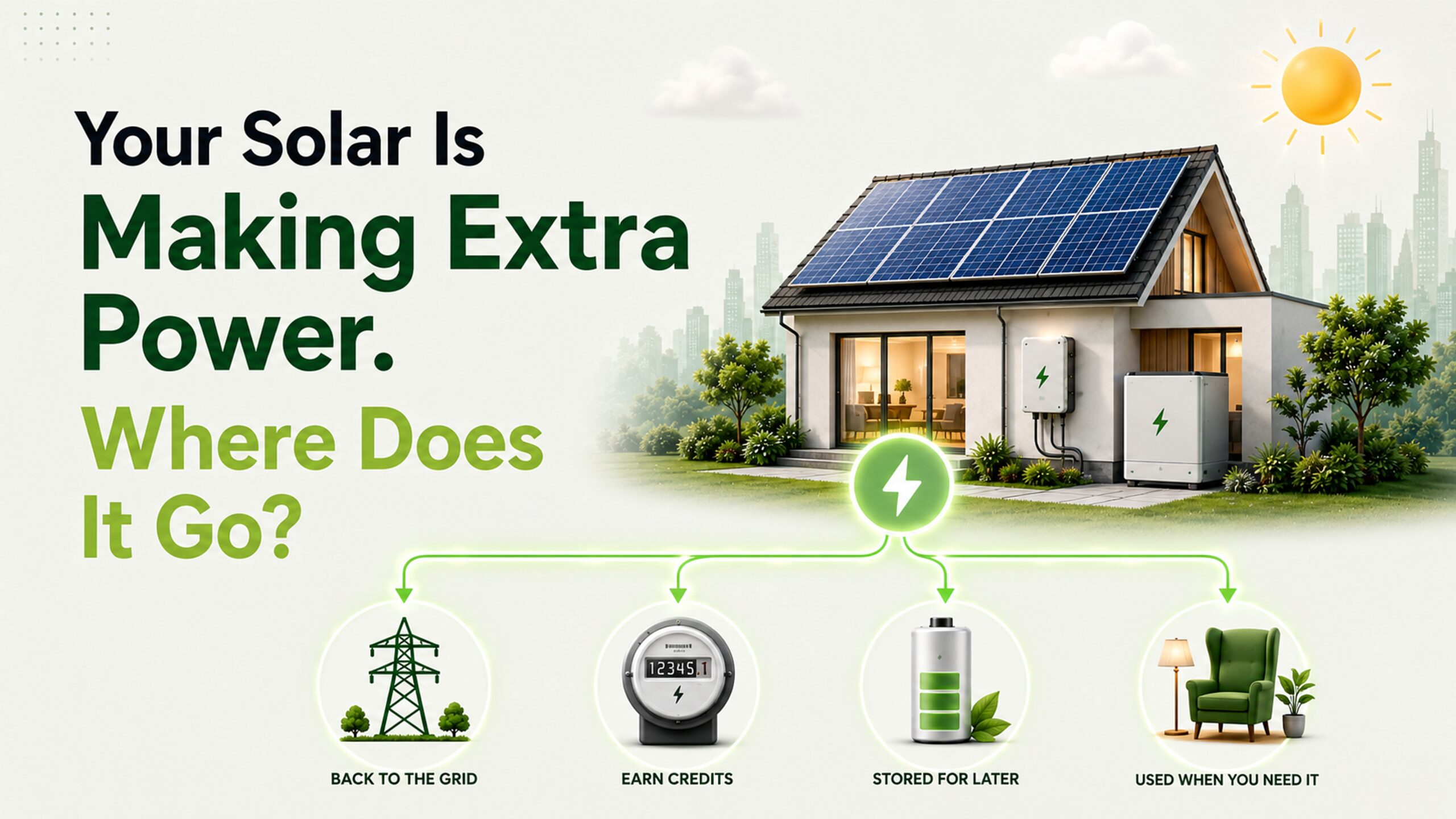
In this blog, we explain what happens if solar panels produce more electricity than your home uses and how net metering helps you save more money.
This guide is shared by Ankit Vyas the MD of Green Ocean Solar who explains rooftop solar systems using real installation experience in Madhya Pradesh.
Most people installing solar for the first time focus on one question – will it generate enough electricity for my home? That’s a fair thing to worry about. But once the system is up and running, especially during peak summer months in Bhopal, a different question quickly becomes more relevant – what happens when the panels produce more electricity than your home actually needs?
The answer is one of the best parts of going solar.
A rooftop solar system connected to your electricity grid has a built-in mechanism that ensures every extra unit of electricity your panel produces is put to good use. You don’t lose surplus electricity, it comes back to you as a credit on your electricity bill.
This is how net metering works. Understanding and implementing net metering changes how you think about the value of your solar investment.
Where Does the Extra Solar Electricity Go?
When your solar panels produce more electricity than what is required, the surplus energy flows back into the main electricity grid. This happens automatically and instantly. There’s no manual process involved.
Your grid acts as a large shared network. You draw from it when you need power and feed it when you have extra. Your electricity meter tracks both direction – how much you consume from the grid and how much you send it back.
This bi-directional relationship between your solar system and grid is the foundation of a policy called net metering.
What Is Net Metering and How Does It Work?
In simple words, net metering measures the difference between the electricity you consume from the grid and the electricity your solar system sends back to it.
If you consume more electricity than you generate, you have to pay the difference. If your solar system exports excess power, you receive credits that reduce your electricity bill.
Here’s a simple example:
- Your solar system generates 300 units this month
- Your home consumes 250 units from the grid this month (at night or on cloudy days)
- You only pay for the 250 units you used and receive credit for the other 50 units you that went back to the grid
In some months, especially summer months where the energy produced is excess, some credits can even roll over to the next billing cycle. This further reduces the bill.
In Madhya Pradesh, net metering credits are settled annually. Monthly credits keep accumulating throughout the year and the final settlement happens in September each year.
Can You Earn Extra Money from Solar?
It all depends on the net metering policy in your state.
In Madhya Pradesh, the net metering framework allows residential solar consumers to offset their electricity bills using solar generation credits. The credits you earn from excess solar energy are applied against the units you draw from the grid.
In most states, this benefit shows up as a reduction in electricity bill. You do not receive a cash deposit in your account.
What About the PM Surya Ghar Muft Bijli Yojana?
Under the PM Surya Ghar Muft Bijli Yojana, eligible residential consumers can get up to 300 units of free electricity per month through a combination of solar generation and government subsidy. If your solar system produces more than 300 units in a month, the excess is governed by your state’s net metering policy.
This makes sizing your solar system correctly very important. A well-designed system ensures you benefit from both the free units and net metering credits. All this without unnecessarily oversizing your rooftop installation.
The PM Surya Ghar subsidy is only available for residential, on-grid solar systems installed through a verified, government registered vendor. Systems with batteries are not eligible under this scheme.
What If Your System Isn’t Connected to Net Metering?
Some solar installations, particularly off-grid systems don’t export surplus energy to the grid. Instead, the excess electricity is stored in a battery bank and used when the panels aren’t generating enough.
Off-grid systems are common in areas where grid connectivity is unreliable. But for most urban and semi-urban households in Bhopal, a grid connected solar system with net metering is more practical and financially rewarding.
Hybrid solar systems offer a middle path – they store some excess energy in batteries for self-use and export the remainder to the grid, giving you both backup power and net metering benefits.
How to Make the Most Of Your Excess Solar Production?
Here are a few practical ways you can get the most of a high producing solar system:
- Shift high-load appliances to daytime
Running your washing machine, water heater, or iron during peak solar hours (typically 10 AM to 3 PM) means you consume solar power directly rather than drawing from the grid.
- Monitor your generation
Most solar inverters come with a monitoring app that lets you track daily generation. Keeping an eye on this helps you spot any drop in output and raise a service request.
- Get your system design right
A system that generates 2–3x your monthly consumption might sound impressive, but it doesn’t always result in better savings. Your installer should size the system based on your actual load and how net metering credits are settled in your area.
You may also like – All You Need to Know About Solar Degradation
Bottom Line
One of the most reassuring things about a grid-connected rooftop solar system is that surplus generation doesn’t go to waste. Every extra unit your panels produce either flows back to the grid as a credit, reducing your bill or charges a battery for later use.
The key is getting the system design right from the start, and making sure net metering is correctly set up at the time of installation. That’s exactly what we help every Green Ocean Solar customer get right.
If you are planning to install rooftop solar for your home or office, explore our solar panel installation service in Bhopal to understand system sizing, net metering, and long term savings.