
...

Net Metering in India

Table of Contents

Banner image for the blog "what is net metering"

In this blog, we explain net metering in India, how it works with rooftop solar systems, and why it helps homeowners reduce electricity bills.

This guide is shared by Ankit Vyas the MD of Green Ocean Solar who explains rooftop solar policies based on real installation experience.

Net metering is a unique billing arrangement for rooftop solar users in India. This system makes rooftop solar quite attractive for homeowners and businesses. Instead of wasting unused solar energy, consumers benefit financially from it.

It entirely changes the economics of solar energy. It helps users reduce their electricity bills. It removes the need for battery usage. 

Recent industry reports show that India added 7.1 GW of rooftop solar capacity in 2025 alone. As India sees rapid growth in rooftop solar installations, net metering is also becoming a backbone of India’s solar revolution. 

In this guide, we will explain everything you need to know about net metering in India. You will learn how it works, who is eligible, how to apply, and how much it costs.

What Is Net Metering?

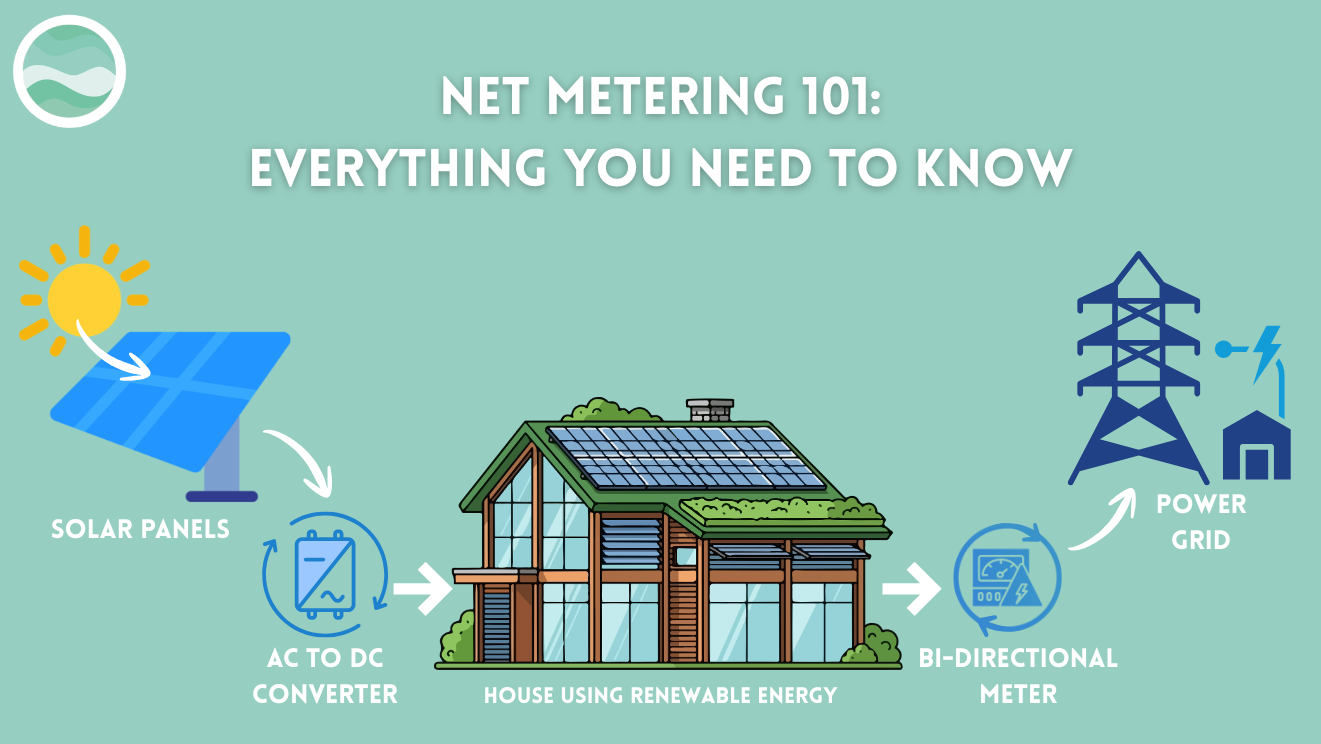
Net metering is a solar billing mechanism. When your rooftop solar generates more electricity than what you require, the surplus power flows into the grid. The electricity distribution system records this export using a bidirectional meter. Similarly, at night when the solar panel is not functional, you can draw electricity from the grid. 

In simple words, net metering measures the difference between the electricity you consume from the grid and the electricity your solar system sends back to it. 

If you consume more electricity than you generate, you have to pay the difference. If your solar system exports excess power, you receive credits that reduce your electricity bill.

This net metering system is only available for on-grid solar systems. 

Key Components of Net Metering System

Here are key components that encompass a net metering system:

  • Solar Panels

These panels capture sunlight and convert it into electricity.

  • Solar Inverters

Solar inverters convert direct current into alternating current that can be used in homes.

  • Bidirectional Meter

This special meter measures electricity flowing in both directions. It records electricity imported from the grid and electricity exported to the grid.

  • Grid Connection

The solar system remains connected to the electricity grid. This ensures that consumers receive electricity even when solar generation is low.

  • Electricity Distribution System

The local utility manages billing and monitors the net metering system.

How Does Net Metering Work in India?

During the day, your solar panels generate electricity. This power first serves your home. If generation exceeds consumption at any point, the surplus is pushed into the utility grid through a bidirectional net meter. The meter records these exported units.

At night or on cloudy days, your panels produce little or no electricity. You draw power from the grid as usual. The meter records these imported units.

At the end of the billing month, your electricity provider calculates the difference. If you imported 150 units and exported 120 units, you would pay for just 30 units. If you exported more than you imported, the surplus is carried forward as energy credits.

This entire process is recorded by a bidirectional net meter. Unlike a traditional electricity meter that only records consumption, a net meter tracks both the inflow and outflow of electricity. This ensures accurate billing for solar users. 

Who Is Eligible for Net Metering?

Residential, commercial, and industrial establishments, housing societies, and educational institutions are all eligible for net metering in India. Here are some eligibility checks for net metering:

  • First, you need to have a valid electricity connection in your name. 
  • Second, your solar system must be grid-tied and installed as per the fixated rules and regulations.
  • On the capacity side, the net metering for solar systems ranges from 1 kW to 500 kW in Madhya Pradesh. 
  • Housing societies usually install systems between 100 kW and 200 kW.

Benefits of Net Metering

  • Lower Electricity Bills

This is the most important benefit. Since, as a consumer, you receive credit for the surplus electricity exported to the grid, these credits can lower your electricity bills. 

  • No Need for Battery Storage

Solar energy storage systems can be expensive. Net metering removes the need for batteries because the grid effectively acts as storage. Excess solar electricity is sent to the grid during the day. Consumers can draw electricity from the grid when solar generation is low.

  • Promote Clean Energy

Net metering makes solar energy more affordable. This affordability increases the usage of solar energy. As more consumers install solar system, the dependence on fossil fuels decreases, which leads to less pollution. 

  • Faster Payback for Solar System

Installing rooftop solar requires an initial investment. Net metering helps recover this investment faster because exported electricity offsets grid consumption. Many rooftop solar systems achieve payback within several years, depending on electricity tariffs.

  • Subsidy Under PM Surya Ghar Bijli Yojana

Homeowners and housing societies that install on-grid solar with net metering are eligible for central government subsidies under the PM Surya Ghar Muft Bijli Yojana.

How to Apply for Net Metering in India?

  • Install On-Grid Solar Panel

The first step is to install a grid-connected solar system. You can partner with a government-registered, reliable solar panel installer in Bhopal who has a proven track record. 

  • Submit Application to DISCOM

After installation, you can submit a net metering application form to the local electricity distribution company along with the required documents. You can complete this process online, or your solar installer can provide assistance with that. At Green Ocean Solar, we take care of this. 

  • Technical Feasibility Check

DISCOM officials visit the property to evaluate the technical feasibility of connecting the solar system to the grid. 

  • Approval & Agreement

If the application is approved, the consumer signs a net metering agreement with the electricity distribution company. This agreement outlines billing rules and system specifications.

  • Installation of Bidirectional Meter

Once the inspection is cleared, the DISCOM installs a bidirectional net meter or configures your existing smart meter to enable the export feature.

  • Commissioning Certificate

Once the meter is installed, the solar system is officially commissioned and the net metering becomes active. 

Also read: 3kW Solar Energy Price in Bhopal

How Much Does Net Metering Cost in India?

When it comes to costing, there are two components: the cost of the net meter and the cost of the broader system. 

The cost of net meter varies from state to state. In Madhya Pradesh, the cost of a single-phase meter could be approximately INR 7,000, whereas for the three-phase solar meter, it could be INR 12,000. Apart from this, installation charges could be around INR 1,000. 

A residential on-grid rooftop solar system in India costs between Rs. 60,000 and Rs. 75,000 per kW before subsidies. With the PM Surya Ghar subsidy applied, the cost reduces by INR 30,000 per kW. A 3kW system can receive a maximum subsidy of INR 78,000. 

Despite all the costs involved, net metering has a proven track record of improving the ROI of a rooftop solar system. 

Conclusion

Net metering is the single most important policy enabler for rooftop solar in India. For anyone considering a rooftop solar system in 2026, net metering should be a default choice. It helps maximize the financial and environmental benefits of solar energy. 

If you are considering solar for your home or office, visit our Solar Panel Installation Service in Bhopal page to explore installation options, pricing, and subsidy support.

FAQs

It typically takes 15 to 45 days from application to commissioning, depending on your state and DISCOM.

A bidirectional meter records electricity flowing in two directions. It measures electricity imported from the grid and electricity exported by the solar system.

In net metering, solar power serves your consumption first, and only the surplus is exported. In gross metering, all solar electricity is exported to the grid, and you buy all your consumption back at the retail rate. For most households, net metering is more financially beneficial.

Most grid-connected solar systems shut down automatically during power outages for safety reasons. This prevents electricity from flowing into the grid while technicians work on repairs. If you want backup power during outages, you need a battery storage system or a hybrid solar system.

Yes. Housing societies can install a rooftop solar system under group net metering or collective net metering, depending on what their state DISCOM allows.

AUTHOR

Ankit Vyas

Ankit Vyas is the founder and CEO of Green Ocean Solar, a leader in solar panel solutions and services across Bhopal, Indore, and Ujjain, Madhya Pradesh. With over six years of experience and training from the Gujarat Institute of Solar Energy, Ankit has become a trusted authority. He spent two years working in India’s solar manufacturing hub in Gujarat before leading his team to complete over 1.2 megawatts of residential solar installations and more than 50 commercial projects. Ankit’s vision is to make quality, affordable solar accessible to every home.

Table of Contents

Banner image for the blog "what is net metering"

In this blog, we explain net metering in India, how it works with rooftop solar systems, and why it helps homeowners reduce electricity bills.

This guide is shared by Ankit Vyas the MD of Green Ocean Solar who explains rooftop solar policies based on real installation experience.

Net metering is a unique billing arrangement for rooftop solar users in India. This system makes rooftop solar quite attractive for homeowners and businesses. Instead of wasting unused solar energy, consumers benefit financially from it.

It entirely changes the economics of solar energy. It helps users reduce their electricity bills. It removes the need for battery usage. 

Recent industry reports show that India added 7.1 GW of rooftop solar capacity in 2025 alone. As India sees rapid growth in rooftop solar installations, net metering is also becoming a backbone of India’s solar revolution. 

In this guide, we will explain everything you need to know about net metering in India. You will learn how it works, who is eligible, how to apply, and how much it costs.

What Is Net Metering?

Net metering is a solar billing mechanism. When your rooftop solar generates more electricity than what you require, the surplus power flows into the grid. The electricity distribution system records this export using a bidirectional meter. Similarly, at night when the solar panel is not functional, you can draw electricity from the grid. 

In simple words, net metering measures the difference between the electricity you consume from the grid and the electricity your solar system sends back to it. 

If you consume more electricity than you generate, you have to pay the difference. If your solar system exports excess power, you receive credits that reduce your electricity bill.

This net metering system is only available for on-grid solar systems. 

Key Components of Net Metering System

Here are key components that encompass a net metering system:

  • Solar Panels

These panels capture sunlight and convert it into electricity.

  • Solar Inverters

Solar inverters convert direct current into alternating current that can be used in homes.

  • Bidirectional Meter

This special meter measures electricity flowing in both directions. It records electricity imported from the grid and electricity exported to the grid.

  • Grid Connection

The solar system remains connected to the electricity grid. This ensures that consumers receive electricity even when solar generation is low.

  • Electricity Distribution System

The local utility manages billing and monitors the net metering system.

How Does Net Metering Work in India?

During the day, your solar panels generate electricity. This power first serves your home. If generation exceeds consumption at any point, the surplus is pushed into the utility grid through a bidirectional net meter. The meter records these exported units.

At night or on cloudy days, your panels produce little or no electricity. You draw power from the grid as usual. The meter records these imported units.

At the end of the billing month, your electricity provider calculates the difference. If you imported 150 units and exported 120 units, you would pay for just 30 units. If you exported more than you imported, the surplus is carried forward as energy credits.

This entire process is recorded by a bidirectional net meter. Unlike a traditional electricity meter that only records consumption, a net meter tracks both the inflow and outflow of electricity. This ensures accurate billing for solar users. 

Who Is Eligible for Net Metering?

Residential, commercial, and industrial establishments, housing societies, and educational institutions are all eligible for net metering in India. Here are some eligibility checks for net metering:

  • First, you need to have a valid electricity connection in your name. 
  • Second, your solar system must be grid-tied and installed as per the fixated rules and regulations.
  • On the capacity side, the net metering for solar systems ranges from 1 kW to 500 kW in Madhya Pradesh. 
  • Housing societies usually install systems between 100 kW and 200 kW.

Benefits of Net Metering

  • Lower Electricity Bills

This is the most important benefit. Since, as a consumer, you receive credit for the surplus electricity exported to the grid, these credits can lower your electricity bills. 

  • No Need for Battery Storage

Solar energy storage systems can be expensive. Net metering removes the need for batteries because the grid effectively acts as storage. Excess solar electricity is sent to the grid during the day. Consumers can draw electricity from the grid when solar generation is low.

  • Promote Clean Energy

Net metering makes solar energy more affordable. This affordability increases the usage of solar energy. As more consumers install solar system, the dependence on fossil fuels decreases, which leads to less pollution. 

  • Faster Payback for Solar System

Installing rooftop solar requires an initial investment. Net metering helps recover this investment faster because exported electricity offsets grid consumption. Many rooftop solar systems achieve payback within several years, depending on electricity tariffs.

  • Subsidy Under PM Surya Ghar Bijli Yojana

Homeowners and housing societies that install on-grid solar with net metering are eligible for central government subsidies under the PM Surya Ghar Muft Bijli Yojana.

How to Apply for Net Metering in India?

  • Install On-Grid Solar Panel

The first step is to install a grid-connected solar system. You can partner with a government-registered, reliable solar panel installer in Bhopal who has a proven track record. 

  • Submit Application to DISCOM

After installation, you can submit a net metering application form to the local electricity distribution company along with the required documents. You can complete this process online, or your solar installer can provide assistance with that. At Green Ocean Solar, we take care of this. 

  • Technical Feasibility Check

DISCOM officials visit the property to evaluate the technical feasibility of connecting the solar system to the grid. 

  • Approval & Agreement

If the application is approved, the consumer signs a net metering agreement with the electricity distribution company. This agreement outlines billing rules and system specifications.

  • Installation of Bidirectional Meter

Once the inspection is cleared, the DISCOM installs a bidirectional net meter or configures your existing smart meter to enable the export feature.

  • Commissioning Certificate

Once the meter is installed, the solar system is officially commissioned and the net metering becomes active. 

Also read: 3kW Solar Energy Price in Bhopal

How Much Does Net Metering Cost in India?

When it comes to costing, there are two components: the cost of the net meter and the cost of the broader system. 

The cost of net meter varies from state to state. In Madhya Pradesh, the cost of a single-phase meter could be approximately INR 7,000, whereas for the three-phase solar meter, it could be INR 12,000. Apart from this, installation charges could be around INR 1,000. 

A residential on-grid rooftop solar system in India costs between Rs. 60,000 and Rs. 75,000 per kW before subsidies. With the PM Surya Ghar subsidy applied, the cost reduces by INR 30,000 per kW. A 3kW system can receive a maximum subsidy of INR 78,000. 

Despite all the costs involved, net metering has a proven track record of improving the ROI of a rooftop solar system. 

Conclusion

Net metering is the single most important policy enabler for rooftop solar in India. For anyone considering a rooftop solar system in 2026, net metering should be a default choice. It helps maximize the financial and environmental benefits of solar energy. 

If you are considering solar for your home or office, visit our Solar Panel Installation Service in Bhopal page to explore installation options, pricing, and subsidy support.

FAQs

It typically takes 15 to 45 days from application to commissioning, depending on your state and DISCOM.

A bidirectional meter records electricity flowing in two directions. It measures electricity imported from the grid and electricity exported by the solar system.

In net metering, solar power serves your consumption first, and only the surplus is exported. In gross metering, all solar electricity is exported to the grid, and you buy all your consumption back at the retail rate. For most households, net metering is more financially beneficial.

Most grid-connected solar systems shut down automatically during power outages for safety reasons. This prevents electricity from flowing into the grid while technicians work on repairs. If you want backup power during outages, you need a battery storage system or a hybrid solar system.

Yes. Housing societies can install a rooftop solar system under group net metering or collective net metering, depending on what their state DISCOM allows.

AUTHOR

Ankit Vyas

Ankit Vyas is the founder and CEO of Green Ocean Solar, a leader in solar panel solutions and services across Bhopal, Indore, and Ujjain, Madhya Pradesh. With over six years of experience and training from the Gujarat Institute of Solar Energy, Ankit has become a trusted authority. He spent two years working in India’s solar manufacturing hub in Gujarat before leading his team to complete over 1.2 megawatts of residential solar installations and more than 50 commercial projects. Ankit’s vision is to make quality, affordable solar accessible to every home.

Seraphinite AcceleratorOptimized by Seraphinite Accelerator
Turns on site high speed to be attractive for people and search engines.