
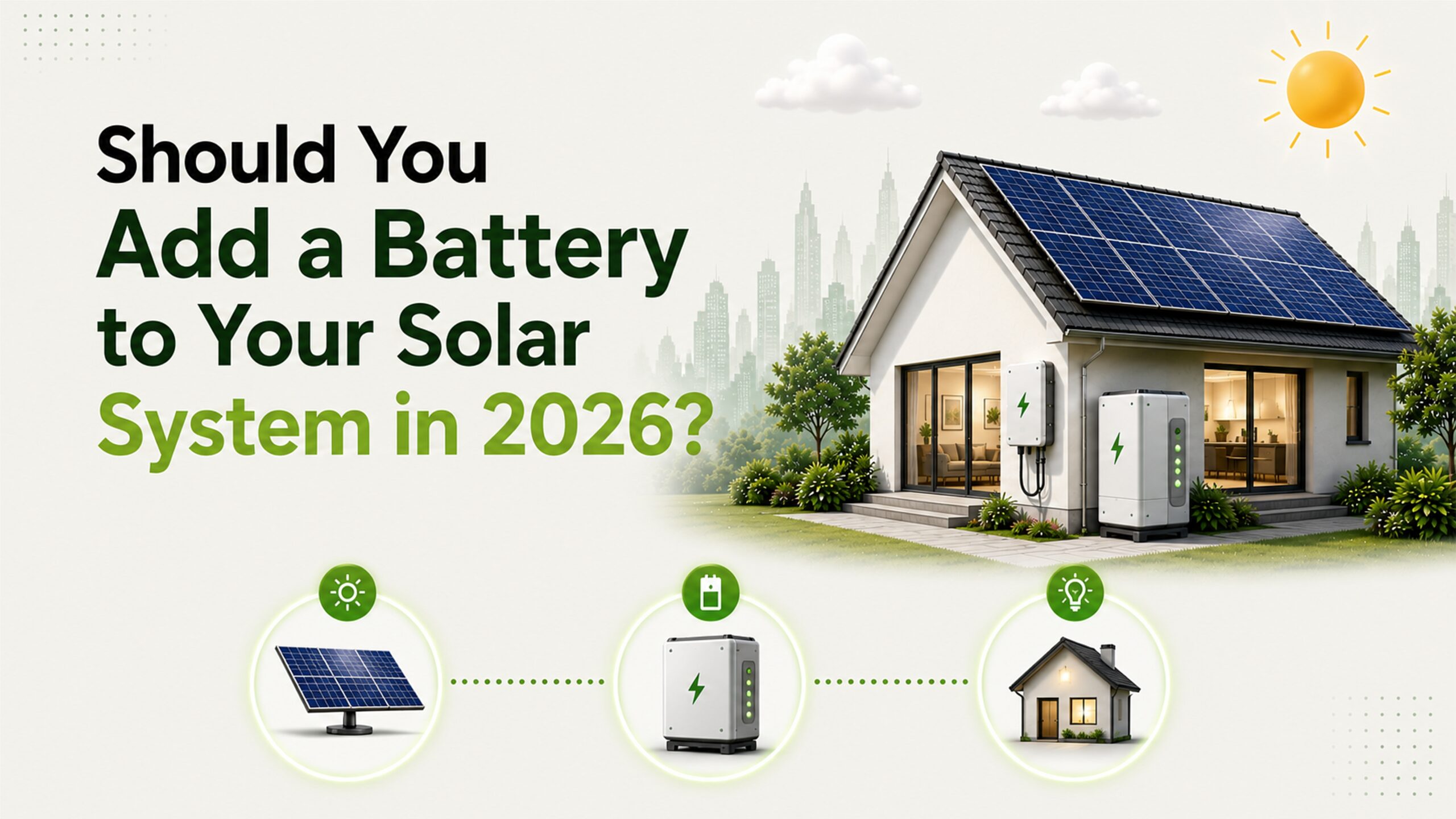
In this blog, we explain whether adding a solar battery for home use makes sense in 2026 and how it affects backup power savings and system performance.
This guide is shared by Ankit Vyas the MD of Green Ocean Solar who explains solar battery systems using real installation and energy usage experience.
Solar panels generate electricity during the day. But what happens during a night or during a power cut? That’s where a solar battery comes in.
Many homeowners have this question – should I add a battery to my solar system? The short answer is it depends and this detailed guide will help you decide.
What Is a Solar Battery?
A solar battery stores the excess electricity your panels generate during the day. Instead of sending that surplus to the grid (under net metering), you store it and use it at night or during a power cut.
With a battery, your home stays powered during load shedding and grid failures.
The most common type used in residential solar systems in India today is the lithium-ion battery. It is compact, efficient, and has a long lifespan compared to older lead-acid batteries.
How Does a Solar Battery Work With Your Existing Systems?
Your solar system produces DC (direct current) electricity. An inverter converts that into AC (alternating current) for use at home. A battery stores DC power before conversion. When the sun goes down or a power cut happens, the battery discharges stored power and your inverter converts it into electricity for your domestic usage.
For this to work smoothly, your system needs to be a hybrid solar system, the one that is built to manage both grid connection and battery storage at the same time.
If you have a standard grid-connected solar PV system, you may need a hybrid inverter upgrade to add a battery.
Why are People Considering Solar Batteries in 2026?
There are 3 primary reasons people are considering adding solar batteries to the system.
- Power cuts are still common. Many areas in MP still face grid instability and outages. A battery keeps your home running during those hours.
- Electricity prices are rising. Grid power is getting more expensive. Storing your own solar energy and using it at peak hour saves money.
- Lithium ion battery prices have dropped over the years. Last year alone, prices felt by 8-10%. This falling price has made battery a viable and affordable option.
When Does Adding a Solar Battery Make Sense?
A battery makes sense when:
- You face frequent power cuts at your home or business in Bhopal or nearby areas
- Your electricity consumption is high in the evening and at night
- You are installing solar for the first time and want to future-proof your system
- Net metering rates are low in your area, making it more beneficial to self-consume than export to the grid
Learn more about how net metering works in India and whether it makes sense for your situation.
When Adding a Battery May Not be Necessary?
You can avoid a battery backup if:
- You already have a reliable grid with minimal power cuts
- You are already getting good returns through net metering
- Your budget is limited and you want the fastest payback on solar
- You are a commercial or industrial customer with continuous daytime load.
Solar Battery Lifespan & Maintenance
A good lithium-ion solar battery lasts 8 to 15 years depending on the brand, usage cycles, and temperature. Unlike older lead-acid batteries, lithium batteries require minimal maintenance. They come with a Battery Management System (BMS) that monitors charge levels, temperature, and performance automatically.
For best results, avoid consistently draining the battery below 20% capacity. Most modern batteries manage this automatically.
On-Grid vs Off-Grid vs Hybrid – Which System Includes a Battery?
The type of solar panel system you use also matters.
- On-grid system – Connected to the grid. No battery. Cheapest option. Shuts down during power cuts (safety feature).
- Off-grid system – Fully battery-powered. No grid connection. Used in remote areas.
- Hybrid system – Connected to the grid and has a battery. More expensive upfront but very reliable.
For most urban and semi-urban homes in Bhopal, a hybrid system is the most practical choice if you want battery backup.
Lead-Acid vs Lithium ion – Which Battery Should You Choose?
If you do decide to go ahead, do not let a lower upfront price on lead-acid batteries mislead you.
Lead-acid batteries cost less initially but need replacement every 3-5 years and can only be discharged to about 50% of their capacity safely. Over a 10-year period, you will spend more maintaining lead-acid batteries than you would have with a lithium system.
LFP lithium batteries last 10-15 years, handle deeper discharge, require no maintenance, and are now available from reputable Indian brands with BIS certification.
For most residential and commercial solar installations in 2026, lithium is the clear long-term choice.
Here is our recent blog: Adani vs Waaree vs Tata Solar Panels
What About Commercial and Industrial Users?
For commercial solar installations, the battery calculation is different. Businesses with evening peak loads, time-of-use tariffs, or high demand charges can use battery storage to reduce their per-unit cost significantly.
A well-sized hybrid system for a commercial facility can deliver payback in 3-5 years when battery discharge offsets expensive peak-hour grid consumption. With accelerated depreciation benefits (up to 40% in Year 1 under Indian tax law) available for commercial solar assets, the financial case strengthens further.
If you are evaluating a commercial solar-plus-storage system in Bhopal, Indore, or Ujjain, get a custom assessment from our team.
Check out our Commercial solar in Bhopal Service Page to learn more!
Bottom Line
The solar battery market in India is evolving fast. Prices will continue to fall over the next few years. If budget is a concern today, install a hybrid inverter now and add the battery later. This keeps your options open without paying full cost upfront.
If you’re still unsure which battery is right for your home or business, you can contact our experts and we can help you select the right solar setup at an affordable cost. You can visit our Solar Panels In Bhopal Service Page to get in touch with us.