
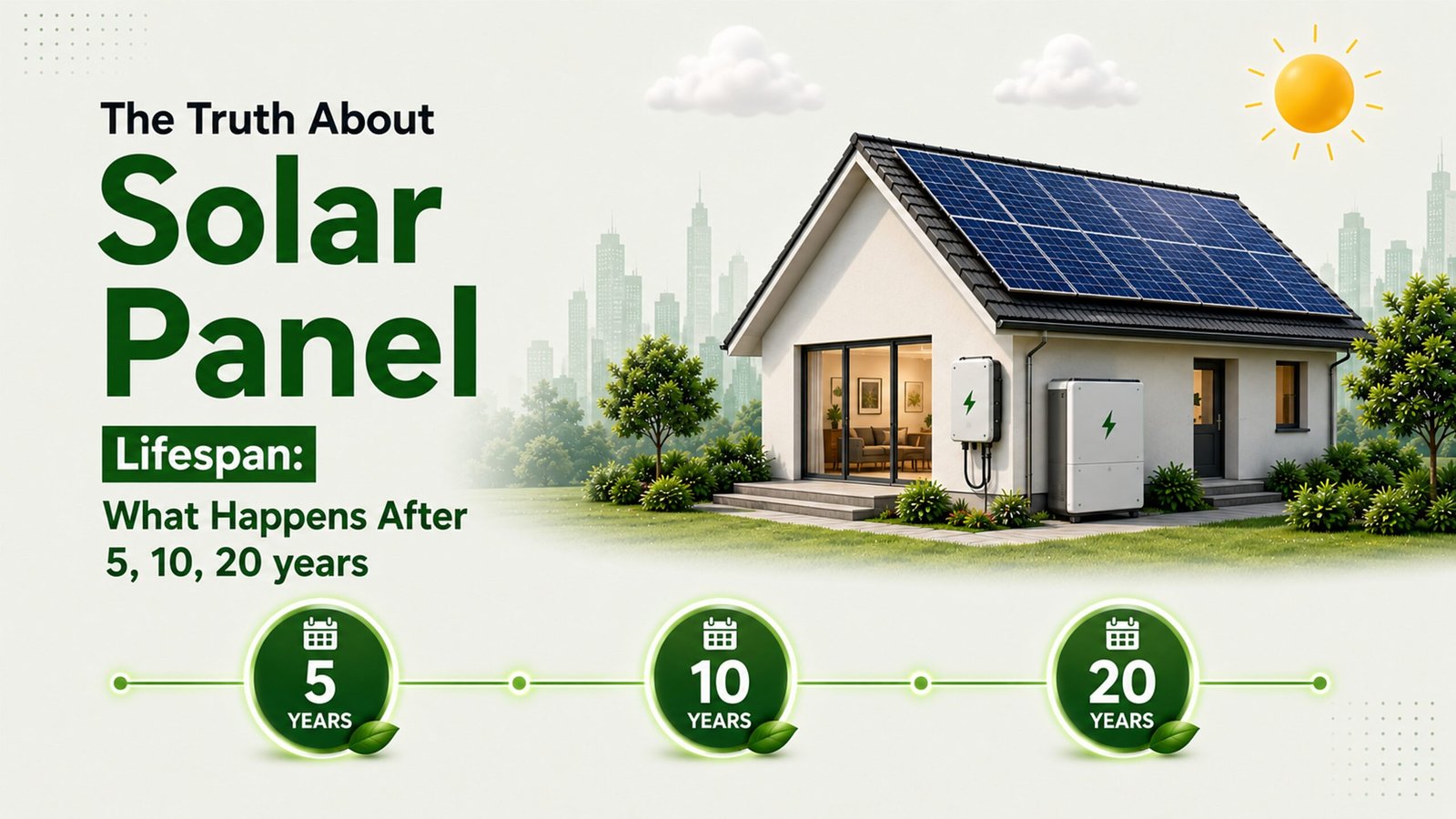
In this blog, we explain solar panel degradation, what causes it, and what you can realistically expect from your solar system over the next 25 years.
This guide is shared by Ankit Vyas the MD of Green Ocean Solar who explains long term solar performance based on practical installation experience.
High quality solar panels come with a 25-year warranty. But what does that actually mean for your home? It means your panels will still produce electricity even after 2 decades, just not at 100% potential.
Every solar panel loses a small amount of efficiency every year. This is called solar panel degradation. It is normal, predictable, and already accounted for in every good solar installation. Understanding it helps you set the right expectations and make smarter decisions from day one. This article is a detailed guide on solar panel degradation and the rate at which it degrades.
What Is Solar Panel Degradation?
Solar panel degradation is the gradual reduction in a panel’s ability to produce electricity over time. It happens to every solar panel regardless of brand or quality.
Think of it like a car battery. A new battery gives you full power. After a few years, it holds slightly less charge. Solar panels work the same way, just much more slowly.
The rate at which a panel loses efficiency is called the solar panel degradation rate. For most quality panels, this is between 0.5% and 0.7% per year. Premium panels from top manufacturers can go as low as 0.3% per year.
What Causes Solar Panels to Degrade?
There are several reasons solar panels lose performance over time:
- Constant UV Exposure
Constant exposure to sunlight breaks down the materials inside the panel.
- Heat Stress
Repeated heating and cooling causes the cells to expand and contract. Over years, this creates tiny cracks in the silicon cells.
- Humidity & Moisture
Water can seep into panels with weak sealing, corroding internal connections.
- Dust
When panels are affected by dust and dirt, they perform like depleted panels. This is why periodic solar cleaning matters more and keeps the efficiency intact.
- Light Induced Degradation
This happens in the first few hours of sun exposure after manufacturing. It’s normal and accounts for about 1–3% efficiency loss right at the start.
What Happens After 5 Years?
At 5 years, your solar system should still be performing at 96-98% of its original capacity.
You likely won’t notice any performance issue or difference in your electricity generation.
However, here are some minor things worth checking at this point:
- Are the panels clean and free of bird droppings or debris?
- Is the inverter working fine?
Routine maintenance at this stage keeps small issues from becoming bigger ones. If you’re unsure about your system’s performance, a professional inspection is a good idea. Learn more about what solar equipment is and how it works so you know what to look out for.
What Happens After 10 Years?
A high-quality solar panel will continue to produce around 93-95% of its original output even after 10 years.
This is still very good.
The main components to watch at this stage are:
- Inverter health
Inverters typically have a lifespan of 10–15 years. By year 10, it’s worth having your inverter checked or replaced if it shows signs of wear.
- Wiring and connections
Over time, cables can degrade due to UV exposure. A professional inspection at 10 years is a smart move.
- Energy production tracking
If you’re connected to the grid, your net metering records will show you exactly how your system is performing year over year. A noticeable dip without a weather explanation could point to early degradation or a maintenance issue.
You may also like – What Happens If Your Solar Panels Produces More Electricity Than You Use?
Does the Type of Solar Panel Affect Degradation?
Yes, the type of solar panels you choose can affect performance and degradation.
- Monocrystalline panels have the lowest degradation rates. They are made from a single silicon crystal, which makes them more stable and efficient over time. These are the best choice for long-term performance.
- Polycrystalline panels degrade slightly faster but are still a solid option for budget-conscious buyers.
Understanding solar panel efficiency like including how efficiency is rated helps you make a smarter purchase decision upfront.
Can You Slow Down Solar Degradation?
Solar degradation is natural. However, if you regularly maintain your panels and follow the right routine, you can slow down the degradation rate.
- Clean your panels regularly
In dusty summers, soling can reduce output by 15-25% without any technical degradation. Regular cleaning of solar panels and maintenance keeps the performance optimal.
- Don’t ignore shade
Panels shaded by trees or new constructions underperform faster. Regular site checks help.
- Monitor your system
Most modern inverters come with apps that track daily generation. If numbers drop unexpectedly, investigate early.
- Choose high-quality panel during installation
A cheap installation may save money upfront but cost more in the long run. Read about the hidden cost of choosing a cheap solar installer before making a decision.
Conclusion
Solar panels degrade slowly, around 0.5% per year for quality panels. After 5 years, you lose very little. After 20 years, your system is still operating at 88–90%. With the right panel choice, regular maintenance, and a good installation, your solar system will deliver value long after it has paid for itself.
Still have questions about rooftop solar in Bhopal? You can contact us and our team will help you understand what to expect from your solar system in the next 25 years. or checkout our Residential solar panel service in Bhopal page to get in touch with us.